
Called Monday about our Wolf range — burners were running hot after we moved in. Technician arrived Tuesday with parts already on the truck. Turns out the altitude orifices had been installed wrong by the previous owner. Calibrated on the spot, everything has been precise since. Very professional, explained every step.
Warming & proofing drawers · Denver
Wolf Warming Drawer Repair Across Denver
A warming drawer is a quiet appliance until it stops holding temperature — plates go lukewarm, dough won't proof, and dinner timing falls apart. We restore even, gentle heat and get the humidity and glides working the way Wolf built them to.
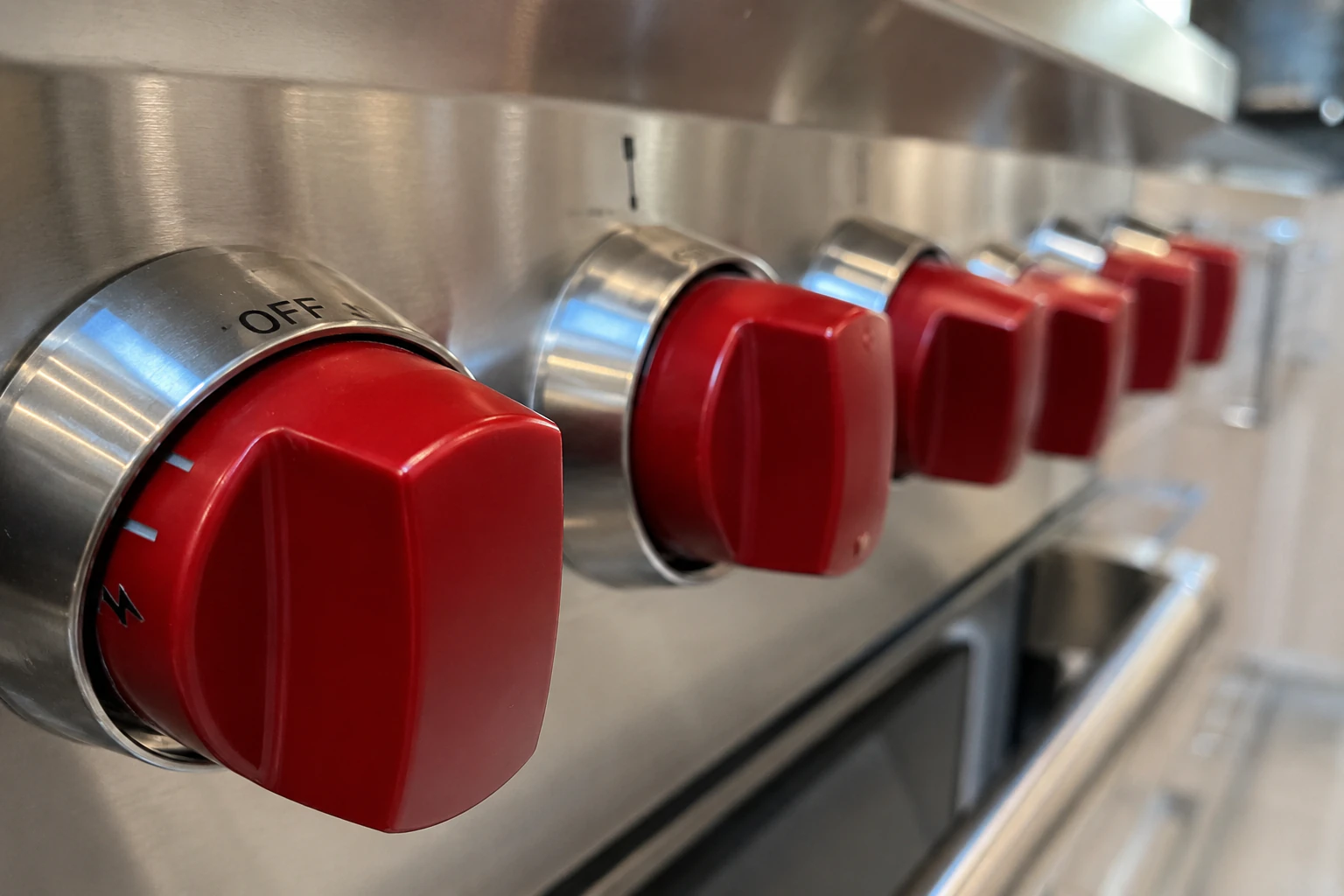
A Wolf warming drawer does two jobs most people never think about until one of them fails: it holds finished plates and platters at serving temperature, and — in models with a proofing mode — it maintains the low, humid warmth that lets bread dough rise on schedule. It is a deceptively simple appliance built around a sheathed heating element, a thermostat or control sensor, and on proofing units a small water reservoir and humidity control that turns dry heat into the moist environment yeast needs.
Because the whole point of the drawer is gentle, steady heat, the failures are rarely dramatic. Nobody hears a bang. Instead the drawer slowly stops doing its one job well: it runs cold, it runs hot enough to dry plates and crack glaze, it will not hold a proofing temperature, or the drawer itself binds and racks on its glides so the seal never closes. Those are the calls we take across Denver — subtle problems on an appliance that is supposed to be invisible.
We diagnose the actual failure before quoting a part, because a drawer that runs cold can mean a burned-out element, an open thermostat, a failed control, or simply a door switch that thinks the drawer is open. Guessing at that on the phone would just get you the wrong part on the first visit.
Warm vs. proof
Holding plates and raising dough are two different modes
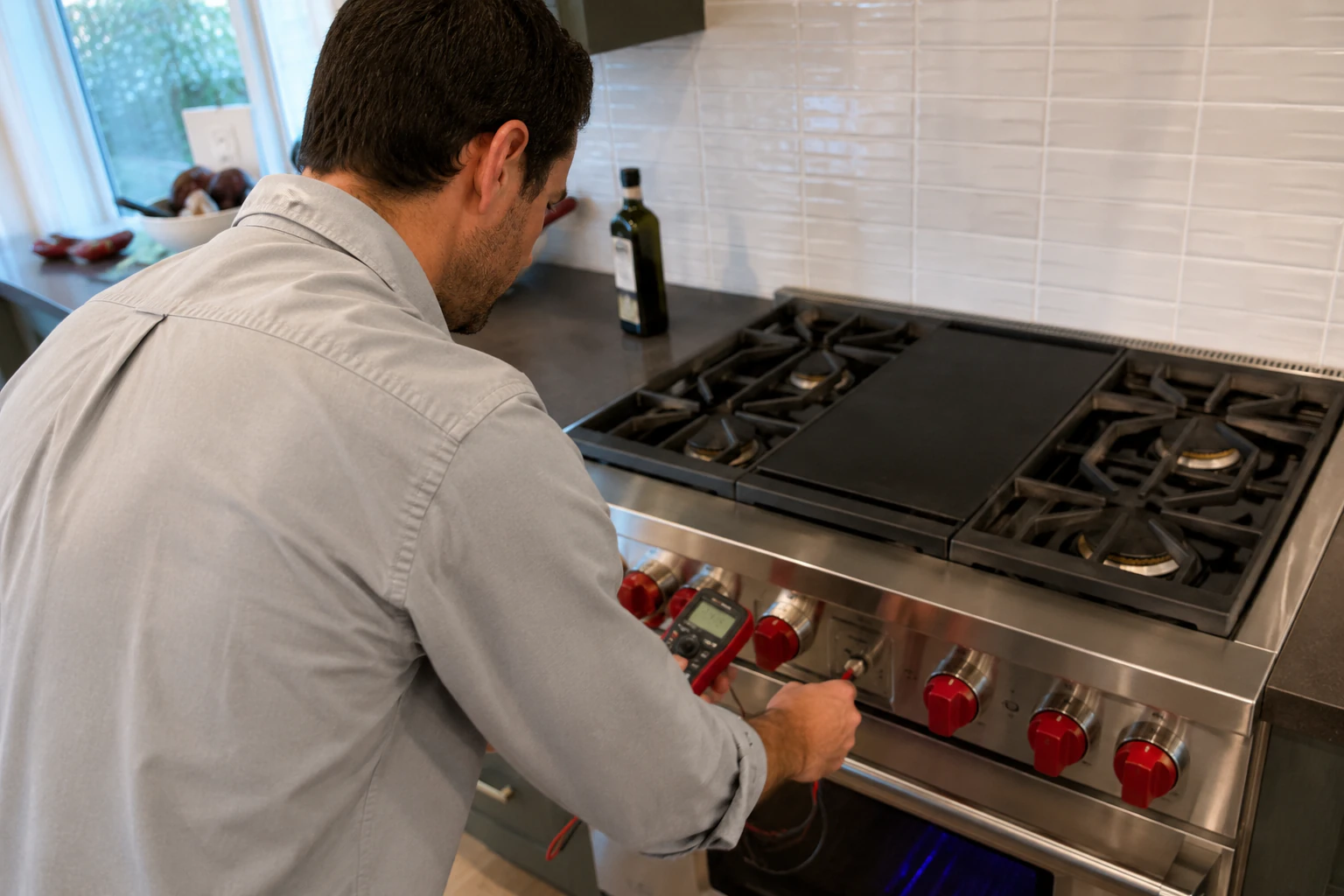
On a Wolf warming drawer the standard warm setting drives the heating element to a chosen plate-holding temperature governed by the thermostat or electronic sensor — dry, steady, in the low-to-mid 100s°F depending on the setting. Proofing mode is where the appliance gets clever: it holds a much lower temperature and adds moisture from a small water pan so dough stays supple and rises instead of forming a skin. When a customer says "the drawer works but my bread won't rise," the element is usually fine and the fault sits in the humidity control, the reservoir, or a temperature offset that has drifted too high for proofing. When a customer says "it never gets warm at all," we look at the element, thermostat and door switch first. Telling us which mode is failing sends us out with the right parts on the van.
How the visit goes
From cold drawer to steady heat
01
Confirm the model
Warming or proofing, integrated or standalone, plus the serial — so we bring the correct element, thermostat or control panel rather than a universal guess.
02
Diagnose on-site
We check element resistance, thermostat continuity, the door switch, and the humidity control before naming a single part.
03
Repair with factory-grade parts
Sheathed elements, thermostats, control boards and glide sets fitted and seated to Wolf spec, with the drawer squared so the seal closes.
04
Verify the hold
We run the drawer through warm and, where equipped, proofing, and confirm it reaches and holds temperature before we leave.
Sound familiar?
Warming drawer symptoms we clear
Any of these means the drawer has stopped doing its one quiet job — and most are a same-visit fix.
Drawer never warms upRuns too hot, dries platesWon't hold proofing tempDough refuses to riseUneven heat front to backControls unresponsiveDrawer binds or racksError code on display
Uneven heat is usually the element or the seal
When a warming drawer heats unevenly — hot at the back, cool at the front — it is almost always one of two things: a heating element with a developing dead spot, or a drawer that no longer closes square against its gasket because the glides are worn or out of alignment. A drawer that sits a few millimeters off lets warm air escape and cold air in, and no thermostat can win that fight. We check the element under load and the drawer's travel and seal together, so we fix the cause of the uneven heat rather than just swapping the part that is easiest to reach.
Good to know
Straight answers about warming drawer repair
Good to know
Straight answers about warming drawer repair
Direct answer
Who repairs Wolf warming drawers in Denver?
Denver Wolf Repair is an independent, Wolf-focused service company covering the Denver metro and Front Range. We repair warming and proofing drawers — heating elements, thermostats, humidity control, glides and touch controls — and diagnose the exact fault before quoting a part. Call (720) 790-9436, answered 24/7, or book online.
Direct answer
Why won't my Wolf warming drawer hold a proofing temperature?
Proofing needs a low, humid heat, so the culprit is usually the humidity control or water reservoir rather than the main heating element. A temperature offset that has drifted too high will also stop dough from rising by drying and crusting it. We test the proofing side specifically instead of assuming the element is at fault.
Direct answer
Can a warming drawer be fixed the same day?
Often, yes. Common elements, thermostats and door switches ride on our vans, so many Denver warming-drawer repairs finish in a single visit. Diagnostics start at a flat $89 service call that applies toward the repair if you proceed.
What it runs
Indicative warming drawer pricing
Warming and proofing drawers vary by model and fault, so these are honest starting points — not quotes. You always get a firm number before any work begins.
Diagnostic / service callApplied toward the repair if you proceed
$89
Thermostat or door-switch replacement
from $119
Heating element replacement
from $169
Drawer glide & alignment serviceRestores square seal
from $139
Humidity control or control-panel servicePart cost varies by model
from $199
Every figure above is a starting estimate. Final pricing is set only after an on-site inspection, because Wolf warming and proofing drawers differ by generation, size and parts availability. The flat $89 service call applies toward the repair if you proceed, and we never charge for work you have not approved.
Warming drawer FAQ
Questions we hear about warming drawers
Do you service both warming and proofing drawers?
Yes. We repair the standard warming function on every Wolf drawer we service, and on proofing models we also handle the humidity control and water reservoir that make dough-raising possible.
Is it worth repairing rather than replacing the drawer?
Usually. Warming drawers are built into cabinetry and finished to match your kitchen, so a targeted repair — a new element, thermostat or glide set — costs a fraction of replacing the unit and refitting the panel.
My drawer heats but sticks when I open it. Can you fix just that?
Yes. Binding or racking almost always traces to worn or misaligned glides, and we can service the glides and re-square the drawer so it slides smoothly and seals fully, whether or not there is anything wrong with the heat.
Are you an authorized Wolf service center?
No — we are independent and not affiliated with, authorized by, or endorsed by Wolf Appliance, Inc. or Sub-Zero Group. Our technicians are factory-trained and we fit factory-grade parts, which keeps our scheduling and pricing flexible.
Do you service warming drawers outside central Denver?
Yes, across the Denver metro and Front Range — from Cherry Creek and Wash Park out to Arvada, Golden, Aurora, Littleton and the north suburbs. Same-day and next-day appointments are usually available.
Related Wolf services
Warm plates and risen dough,
right on schedule.
Same-day warming & proofing drawer diagnostics across Denver Metro. Phone answered 24/7 — or book online.
Customer reviews
Trusted in Denver kitchens
Recent customer experiences with our appliance repair service.
Our Wolf oven was reading 50 degrees low — we'd been overcompensating for months. The tech tested it, replaced the temp sensor, and re-ran calibration. Baking has been completely different since. Honest diagnostic, fair price, no upselling.
Three igniter clicks on the left burner, then nothing. A different company quoted replacing the entire control board — nearly $900. Denver Wolf Repair diagnosed a faulty igniter module and fixed it for a fraction of that. Trust the specialists.
Wolf dual-fuel range with erratic simmer on the gas side. Technician found the altitude conversion had never been completed by the original installer — corrected it in under an hour. At 5,280 feet this is apparently common. Highly recommend for anyone with a similar setup.
Sub-Zero stopped cooling — called at 7 am, someone was here by 11. Condenser fan, which they had in the van. Groceries were saved. These technicians clearly know this equipment cold.
Wolf range hood stopped capturing smoke. Tech found a failing blower motor, ordered the part and installed it within two days. No upsell attempts, no unnecessary extras. Clean and done right.
Scheduling was easy, tech was on time. Oven door seal was cracked and they replaced it cleanly. Would have given 5 stars but had to wait a few extra days for the part. Otherwise thorough diagnostics and honest about what actually needed fixing.
Control board on our Wolf oven started throwing error codes. I dreaded a huge bill, but the tech walked me through exactly what was wrong before touching anything. Repair was done same visit. Professional from first call to sign-off.